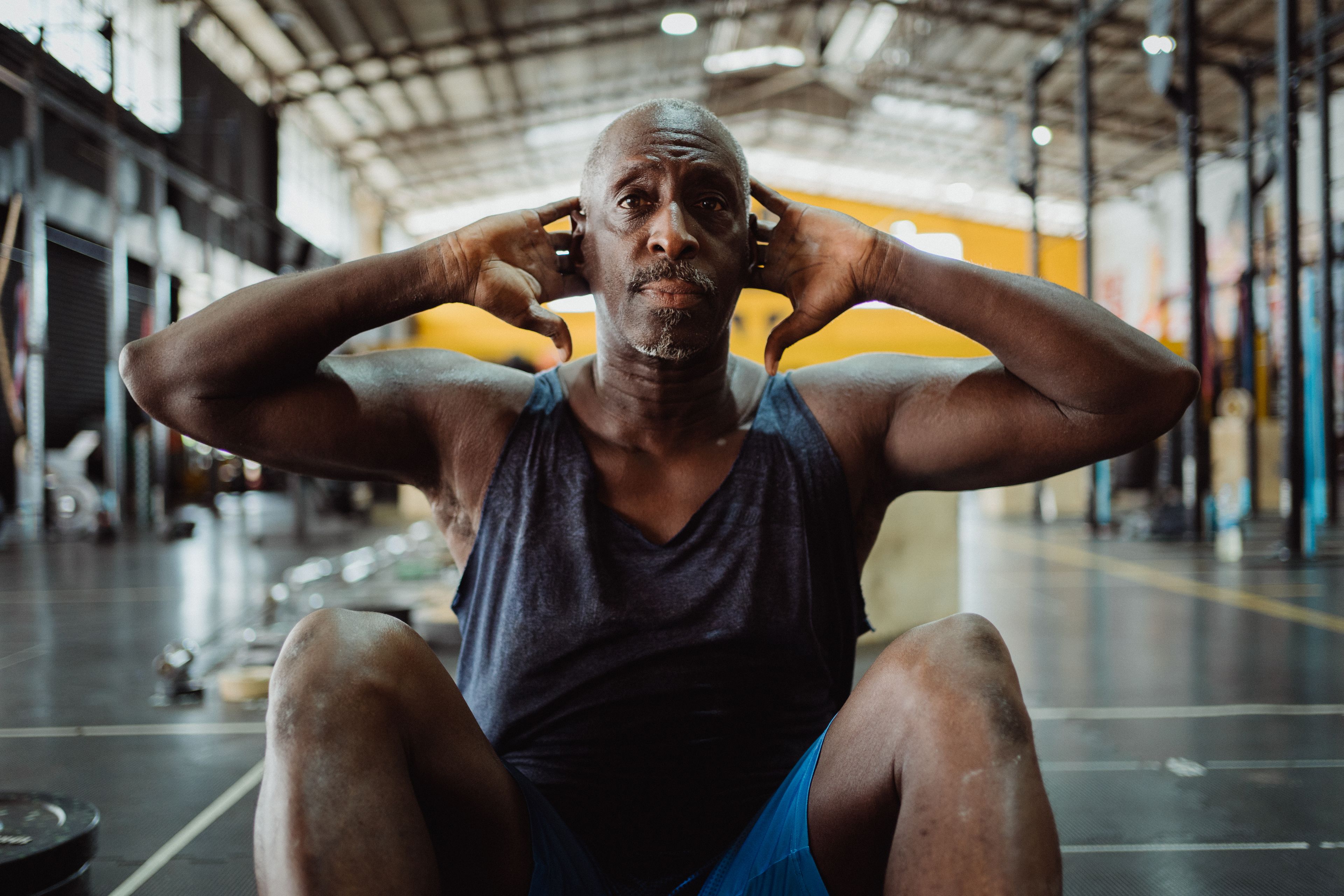
How to Build Strength After 60 Without Wrecking Your Knees, Back, or Motivation
John Fealy

You have probably already had the thought: "I should be doing something about my strength." Maybe it came while carrying groceries up the front steps and stopping halfway. Maybe it came when you stood up from the floor and needed a hand. Maybe it came from your doctor, or your daughter, or a magazine headline that made it sound like a thirty minute fix.
Then you tried something, and something complained. A knee. A shoulder. A lower back that felt fine during the exercise and unhappy the next morning. Or nothing hurt at all, but you were so sore for four days that you quietly stopped.
Here is the part nobody tells you: if you want to know how to build strength after 60, the answer is not to try harder. It is to try more carefully, with less weight than your ego wants and more consistency than your calendar is used to. Strength is a slow asset. It responds to patient, repeated, well-measured work. That is good news, because it means you do not need heroic effort. You need a plan you can repeat on an ordinary Tuesday.
I am John Fealy. I coach people in their sixties, seventies, and eighties, one on one and through online courses, and my whole approach is built on sustainable change. Not a twelve week transformation photo. A body that still carries, climbs, lifts, and recovers a year from now.
This guide walks you through the actual mechanics: what to train, how heavy, how often, how to know it is working, and what to do when your body pushes back. You can start today with no gym membership.
Start With the Three Movements You Already Use Every Day
Before you touch a dumbbell, look at your life. Almost every strength you need at 60 plus falls into three categories, and they map neatly onto three movements.
- Getting up from things and off the floor. Chairs, toilets, car seats, the bottom of the stairs. This is a squat pattern and a hip hinge pattern.
- Picking things up and carrying them. Groceries, laundry baskets, grandchildren, a bag of soil. This is a hinge and a carry.
- Pushing, pulling, and catching yourself. Opening a heavy door, reaching overhead into a cupboard, arresting a stumble with one hand on a railing. This is a push and a pull, plus some single leg balance.
So your foundation is four movements: a sit to stand (squat), a hip hinge, a push, and a pull, with single leg work layered in. That is it. Everything else is variation.
Here is what a first session can look like with no equipment at all.
- Chair sit to stand, 8 to 10 reps. Feet flat, knees tracking over your middle toes, chest tall. Stand up without using your hands if you can, and lower yourself slowly instead of dropping. That slow lowering is where a lot of the strength lives.
- Hip hinge to a countertop, 8 to 10 reps. Hands on the counter for balance, feet hip width, sit your hips back like you are closing a car door with your rear end, shins tall, feel a stretch behind your thighs, then press back up. Do not round your lower back to get lower.
- Wall push up, 8 to 12 reps. Hands at chest height, body in one line from head to heels, elbows at roughly 45 degrees. As this gets easy, move your hands to a counter, then a sturdy table, then the floor.
- Counter row, 8 to 12 reps. Hold the edge of a sturdy counter or a doorframe, walk your feet back slightly, and pull your chest toward your hands while squeezing your shoulder blades together. Yes, you will look odd doing this in your kitchen. It works.
- Single leg balance, 20 to 30 seconds per side. Stand near the counter with fingertips available. Progress by using fewer fingers, then no hands.
That is roughly fifteen to twenty minutes including rest. Notice that nothing here requires getting on the floor, and nothing loads your spine in a way that punishes you the next day.
How to Choose a Starting Weight Without Guessing
This is where most people go wrong, and it is almost always in the same direction: too much, too soon, with the plan to "see how it goes." Here is a better rule.
Pick a weight or a variation where you could do three or four more reps than you planned, but you stop at your target. If you were aiming for 10 reps, this means rep 10 is challenging and rep 14 would still be possible. That sounds too easy. It probably is. That is the point. The first two or three weeks are about teaching your joints and your nervous system the pattern, not proving anything.
Then use this simple sequence to know when to progress:
- Finish all your target reps with clean form for two sessions in a row.
- The last rep feels noticeably easier than it did a week ago, not just doable through gritted teeth.
- Add the smallest available step: two extra reps, a slightly heavier dumbbell, or a harder variation. One step, not three.
What a "smallest step" looks like in practice:
| Exercise | Starting point | Next step | Step after that |
|---|---|---|---|
| Sit to stand | Tall dining chair, no hands | Lower chair, slow 3 second lowering | Hold a light dumbbell at your chest |
| Hip hinge (Romanian deadlift) | Bodyweight to counter | One light dumbbell in each hand | Slightly heavier pair, same reps |
| Push up | Wall, hands at chest height | Kitchen counter | Sturdy table, then a step, then the floor |
| Row | Counter edge, feet slightly forward | Light band anchored to a door | Heavier band or dumbbell row with hand on a chair |
| Suitcase carry | One grocery bag, 30 seconds per side | Heavier bag, same time | Same weight, 45 to 60 seconds per side |
Notice that every step changes only one thing. When people change weight and reps and range of motion at once, they cannot tell what caused the soreness or the progress.
Structure Your Week: Two Sessions, Then Three
Two full body sessions per week is a genuinely good starting dose for most people over 60 who are returning to training. Add a third only once two sessions have felt manageable for a month or so.

A workable weekly pattern looks like this:
- Monday: full body, 30 to 40 minutes including rest.
- Wednesday: easy walking, 20 to 30 minutes. Not a workout. A walk.
- Friday: full body, same exercises, same order. Reps or weight may move slightly.
- Other days: ordinary life, plus two or three minutes of balance practice while you wait for the kettle.
Rest between sets matters more than people expect. Sixty to ninety seconds on the bigger movements is reasonable. Sit down. Breathe. Sip water. Rushing your rest is how form falls apart at the end of a set.
If you add the third day later, keep it identical in structure. Same four movements, same order, possibly a little lighter if you are carrying fatigue from the week. Variation is fun, but repetition is what builds the skill and the strength.
What if you only have one day?
Then do one day, fully, and add movement snacks on the other days: ten chair sit to stands while the microwave runs, a set of wall push ups before your shower, a thirty second single leg stand while you brush your teeth. One real session plus daily small doses is far better than a plan you abandon by week three.
Track Four Things, Not Forty
You do not need a spreadsheet with forty columns. You need enough data to answer one question: is this working, or is this just making me tired?
Record four things after each session: the exercise, the weight or variation, the reps, and one word about how it felt. Something like "sit to stand, low chair, 3 sets of 10, solid." That takes twenty seconds.
Then, once a month, test three simple life measures:
- How many sit to stands can you do from your usual chair in thirty seconds, with good form?
- Can you carry a loaded bag from the front door to the kitchen without setting it down, and did that get easier?
- How long can you stand on one leg with your eyes open and no hand support?
These are not lab tests, and they are not a competition. They are a way of noticing change that a scale will never tell you about. Strength gains often show up in daily life before they show up in the mirror, and honestly, they matter more. What good is a smaller number on a scale if you still cannot get off the floor without help? For the people I work with, weight loss and strength are treated as one project, not two, because muscle is what lets you keep the weight off while still living your life.
The single most useful adjustment you can make is to leave every session feeling like you could comfortably do a few more reps. That is not laziness. That is the margin that lets you come back on Friday, and next month, and next year.
What to Do When Something Hurts
Soreness that arrives a day later and fades within 48 hours, in the muscle you trained, is normal. Pain that is sharp, that lives in a joint, that wakes you at night, or that changes how you walk is a different thing. Treat it differently.
Use this sequence before you decide to quit an exercise:
- Shrink the range. A shallower squat, a hinge that stops at mid shin. Many knees and backs are fine in the top half of a movement and unhappy at the bottom.
- Change the angle or the support. Hands on a counter for the hinge. Hands on the wall for the push up. A chair with arms for standing up.
- Swap the movement, not the pattern. If back squats irritate a knee, sit to stands from a box may not. If floor push ups irritate a wrist, counter push ups may not. Keep the pattern, change the tool.
- Reduce the load and hold there for two weeks. Then build back one small step at a time.
If pain persists beyond a couple of weeks, changes your sleep, or comes with swelling, numbness, or weakness, see a physician or a physical therapist. That is not a failure of your plan. It is good information gathering, and a good coach will want you to do it.
How to Keep Going Past Week Three
Most quit points are not injuries. They are logistics and boredom. Plan for both now.
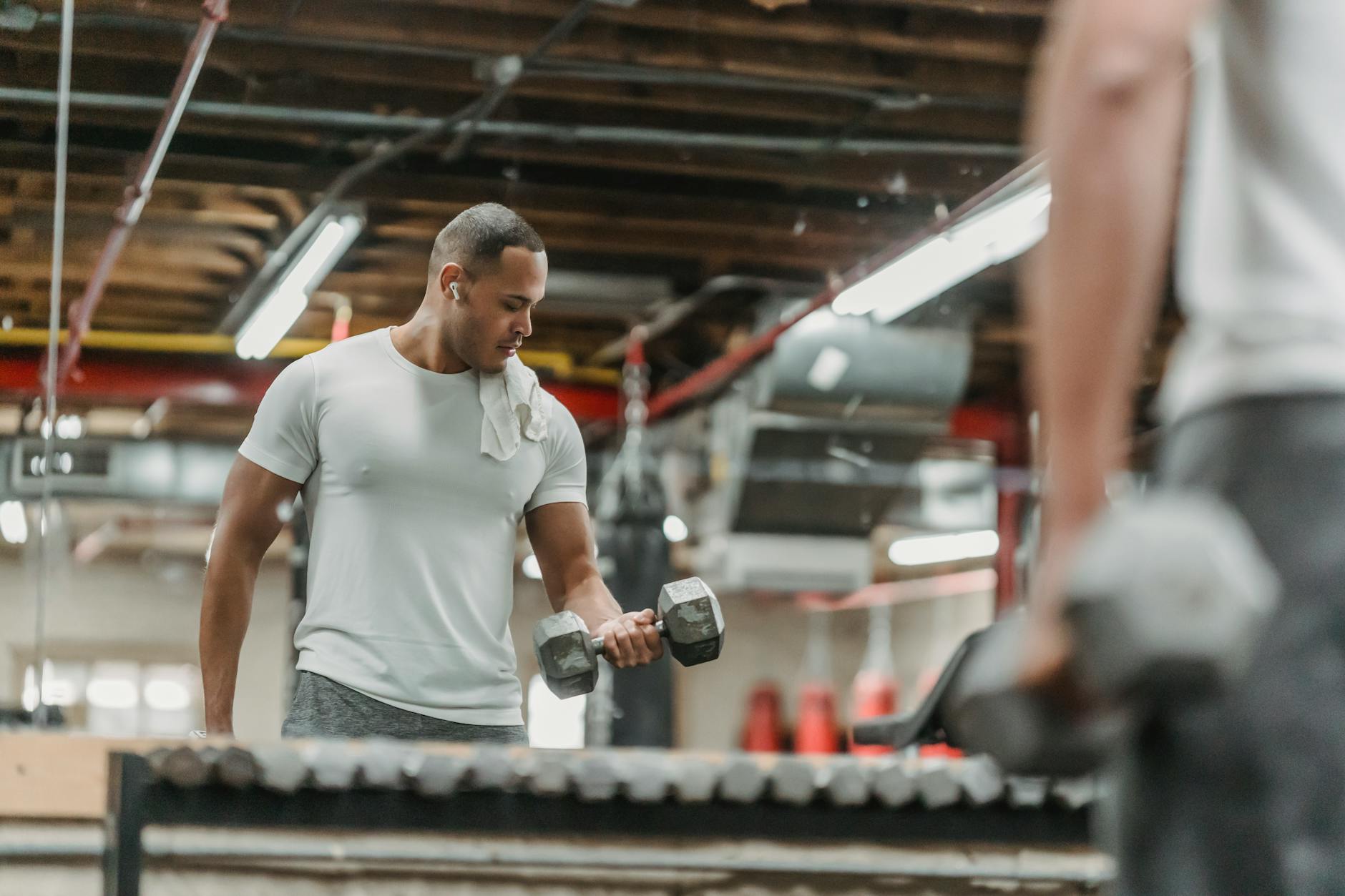
Make the sessions absurdly easy to start
Set out your clothes the night before. Keep the dumbbells in the room where you drink your coffee. Write your four exercises on a card and put it on the counter. The goal is to remove every decision except the first rep.
Put your sessions on the calendar like appointments
Same days, same time, for a month. If you miss one, you do not reschedule it and you do not double up. You do the next one.
Plan for interruption
Travel, illness, a family visit, a bad night's sleep. Decide in advance what your minimum version is: one set of sit to stands and one set of counter push ups, done in six minutes. A minimum version keeps the habit alive while the full version waits.
Give your effort a purpose beyond the mirror
Pick something specific and real. Carrying your own suitcase on the overhead. Getting up off the floor to play with a grandchild. Walking the longer route at the farmers market without sitting down. Write it somewhere you will see it. On the hard days, that sentence does more work than motivation does.
And on nutrition, keep it equally unglamorous. A palm sized portion of protein at each meal, water within reach, vegetables at two meals, and one planned treat you actually enjoy. Aggressive restriction while you are also asking your body to build strength is a recipe for feeling terrible and stopping. Steady is the strategy.
Your First Two Weeks, Mapped Out
Here is a starting sequence you can run with no equipment beyond a chair and a counter.
Week one. Two sessions, deliberately easy. Two sets of each of the four movements, stopping well short of difficulty. Balance work every day, one minute total. Write down what you did.
Week two. Same two sessions, now three sets. If week one felt easy, add one small step to your sit to stand or your hinge, and leave the rest alone. Keep the daily balance practice.
Week three onward. Hold the structure, progress one thing at a time, and reassess at the end of each month with the three life tests above.
If that feels almost too modest, good. You are reading this because something in your body already told you that force is not the answer. Strength after 60 is built by showing up often, loading carefully, and measuring honestly. It is slower than the internet suggests and far more durable than a crash program. Your job this week is not to impress anyone. It is to finish the session and still want to do the next one.